

A Woman Who Faced Three Ship Disasters
- Some people spend their entire lives avoiding danger. Violet Jessop seemed to encounter it wherever her career at sea took her.
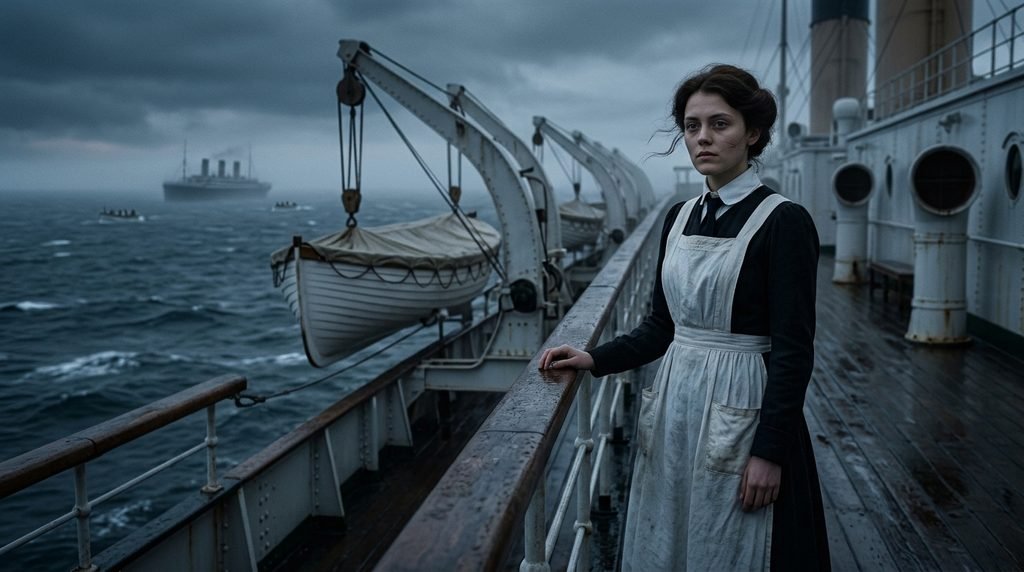
- In 1911, she was aboard the RMS Olympic when it collided with a British warship.
- In 1912, she was working aboard the famous Titanic when it struck an iceberg and sank.
- Then, in 1916, she was aboard the Britannic when it hit a mine and sank during World War I.
- Three major maritime disasters. One extraordinary survivor.
- But who was Violet Jessop, and how did she survive?
Her Life Before the Titanic
Violet Constance Jessop was born on October 2, 1887, in Argentina to Irish immigrant parents.
Her early life was not easy. As a child, she suffered serious illnesses, and her family eventually moved to England.
After her father died, Violet helped support her family.
Following in her mother’s footsteps, she began working as a stewardess aboard passenger ships.
Her job involved looking after passengers and helping maintain their comfort during long journeys.
She could never have imagined that this career would make her part of maritime history.
The First Incident: RMS Olympic (1911)
In 1911, Violet joined the RMS Olympic, one of the largest passenger ships of its time.
On September 20, 1911, the Olympic collided with HMS Hawke, a British Royal Navy cruiser, near the Isle of Wight.
The collision caused serious damage to the Olympic.
However, the ship did not sink. It managed to return to port for repairs.
Violet survived the incident and continued her work at sea.
Little did she know that her next assignment would become one of the most famous voyages in history.
The Second Disaster: RMS Titanic (1912)
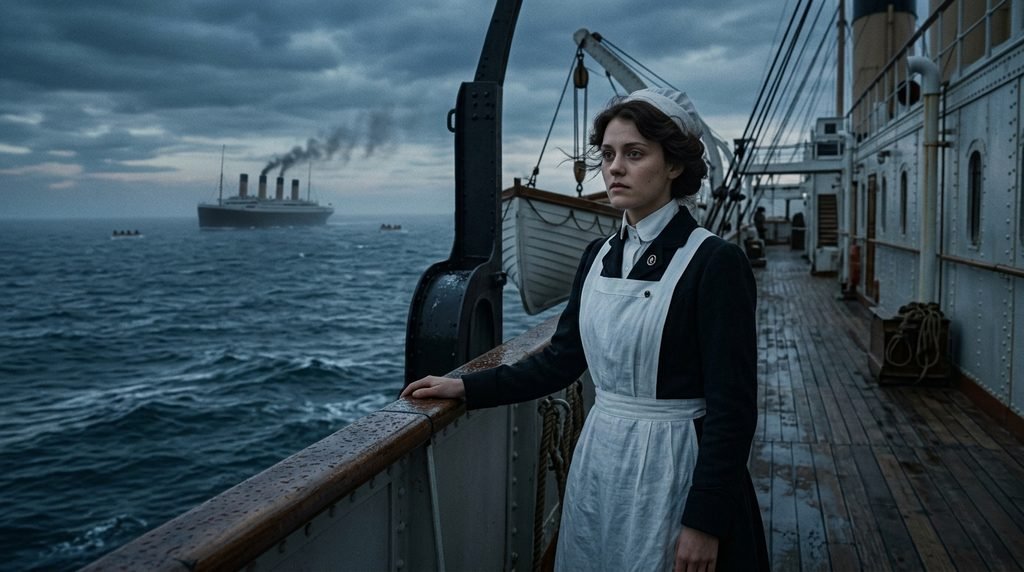
In April 1912, Violet joined the RMS Titanic as a first-class stewardess.
The Titanic was considered one of the most impressive passenger ships ever constructed.
On April 14, during its maiden voyage across the North Atlantic, the ship struck an iceberg.
The collision caused the vessel to sink.
As the situation became increasingly serious, passengers and crew were directed toward the lifeboats.
Violet was ordered to help passengers understand what they needed to do.
Eventually, she was placed in Lifeboat 16.
She survived the disaster.
More than 1,500 people lost their lives that night, making the Titanic sinking one of the deadliest peacetime maritime disasters in history.
Violet had survived one of the most famous shipwrecks ever recorded.
But she was not finished working at sea.
The Third Disaster: HMHS Britannic (1916)
During World War I, Violet served as a nurse aboard the HMHS Britannic, a sister ship of the Titanic that had been converted into a hospital ship.
On November 21, 1916, the Britannic was sailing through the Aegean Sea when it struck a German mine.
The explosion caused serious damage, and the ship began sinking.
Violet and other people aboard attempted to escape using lifeboats.
However, some lifeboats were endangered by the ship’s still-moving propellers.
Violet jumped into the water to escape the danger.
She survived, although she suffered a serious head injury.
Once again, she had escaped a sinking ship.
This time, the disaster happened just four years after the Titanic.
Why Was She Called Miss Unsinkable?
After surviving the Titanic and Britannic disasters, Violet became associated with the nickname “Miss Unsinkable.”
Her story became famous because of the extraordinary circumstances surrounding her career.
However, there is an important historical distinction: the Olympic did not sink. It was involved in a serious collision but returned to port.
Violet survived two ship sinkings and one major collision.
Even after these experiences, she returned to working at sea.
She Returned to the Ocean
You might expect someone who had survived two major ship sinkings to leave the sea forever.
But Violet continued working aboard ships for many years.
She returned to the Olympic after World War I and continued her maritime career until retiring in 1950.
She eventually spent more than four decades working at sea.
Violet Jessop died in England in 1971 at the age of 83.
The Incredible Legacy of Violet Jessop
Today, Violet Jessop is remembered as one of the most remarkable survivors in maritime history.
Her life connected her to three famous ships:
- RMS Olympic – survived its collision with HMS Hawke in 1911.
- RMS Titanic – survived its sinking in 1912.
- HMHS Britannic – survived its sinking in 1916.
Her experiences are a reminder that history is not just about famous ships and disasters. It is also about the ordinary people whose lives were changed by extraordinary events.
Final Thought
Violet Jessop boarded ships to earn a living and support her family.
She could never have imagined that she would become known around the world for surviving two famous ship sinkings.
Sometimes, the most unbelievable stories in history are not fiction.
They are real lives that people actually lived.
Historical accuracy note: The Olympic collision, Titanic sinking, and Britannic sinking are three separate events. Only the Titanic and Britannic sank.


